Method
Eight chairs, the same step twice, and notes you can still read at home.
We teach as if memory and dignity occupy the same room — because they do. The method is slow on purpose, and it is written down so it does not depend on a good day.
The teaching team at Seniorlearnersgroup works from a few rules that sound obvious until you have sat in a class that ignored them. We do not praise people for being brave as if learning a setting on a phone were a character test. We do not move on because two of eight have understood. We do not use a projector as a substitute for sitting beside someone whose fingers do not land where a tutorial drawing says they should land.
Repetition is the method, not a consolation prize. A step that has been shown once has been shown once. In this room it is shown again, then written, then done by the learner while the tutor watches the thumbs, not the clock. If that sounds tedious, it is the kind of tedium that produces a Singpass login you can repeat on a Wednesday without ringing a child at work.
We use the device you already own. A classroom set of identical tablets makes a neat photograph and a useless week later, when the buttons are in different places and the account is not signed in. Bring the phone with the cracked corner and the extras a relative installed. That is the machine the lesson has to survive.
Language in class is English or Mandarin, matching the programme. Explanations in Malay or Hokkien are available when you ask for them in the first conversation. We will not switch the whole group’s language mid-lesson unless everyone is served by that. Side-explanations happen at the table, quietly, without turning the learner into a spectacle.
Printed notes are set large. They describe taps in order. They are not a textbook chapter with a decorative cover. If you misplace a sheet, we reprint it. If the type is still too small, say so; we can print a larger run. The hearing loop is in the main classroom. Tell us if you use a hearing aid so we seat you where it helps, instead of discovering in week four that you have been nodding at a muffled version of the lesson.
What a lesson looks like from the chair
We recover last week before we add anything
Someone will have practised. Someone will have not. Both are expected. We start by doing the previous sequence again, not by asking for a show of hands about who “got it”. Hands in the air are a poor instrument. Watching the screen is better.
One new sequence, demonstrated slowly
The tutor does it on a phone held so the group can see, then does it again. Then you do it. Then the neighbour does it, which is often when the missed tap becomes visible. We do not stack three new sequences in an hour because the third will erase the first.
You leave with the same sequence on paper
The sheet uses the words we used in the room. If the phone’s own labels are in English, the sheet matches those labels. Homework is to repeat the sequence twice before the next class, not to explore freely and arrive with a tangle.
Who is in front of the class
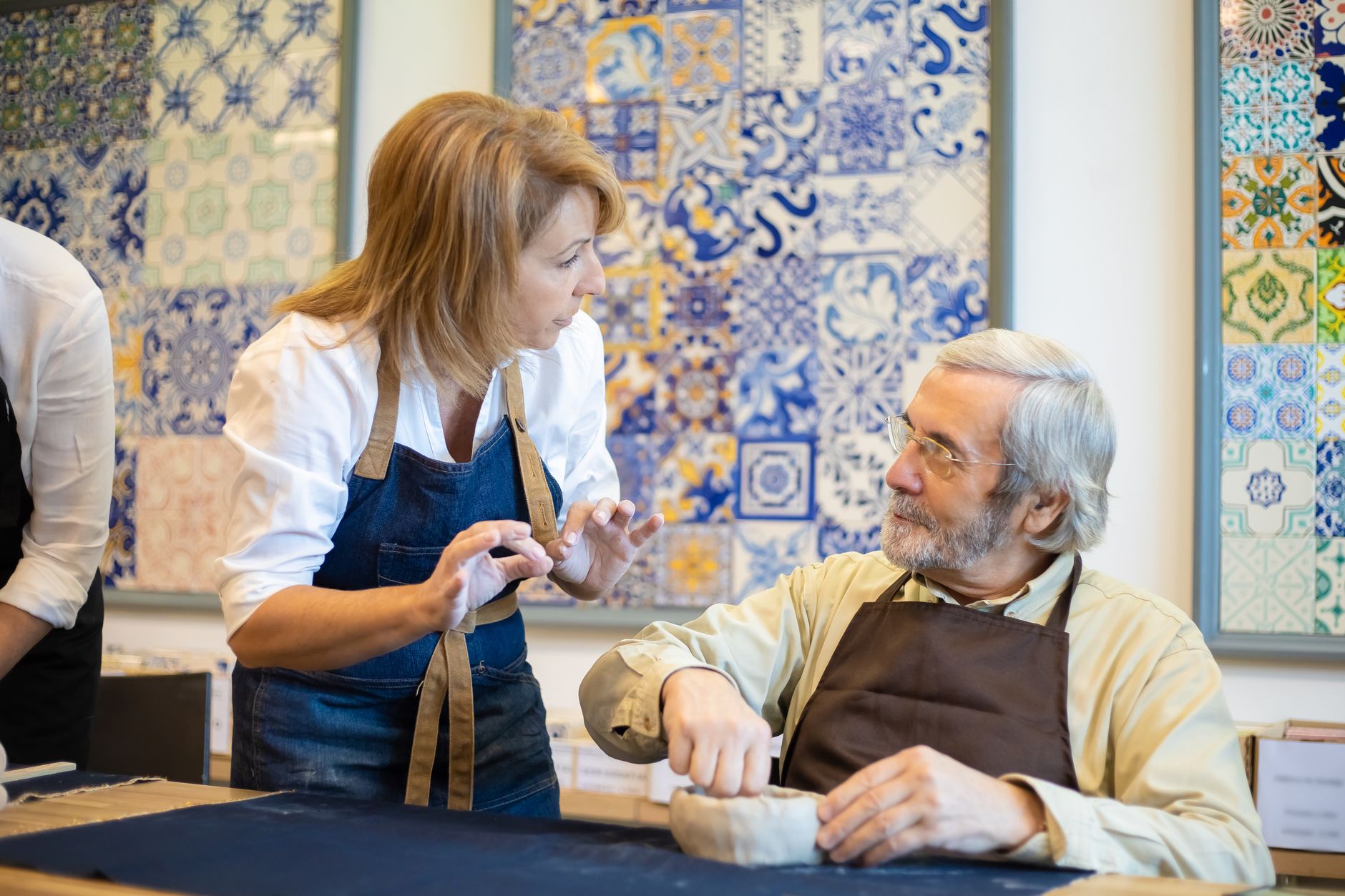
Tutors at Seniorlearnersgroup are people who already know how to wait. They have taught adults before. They are not recruited for a performance of youthful energy. In a language class they will let a silence stand rather than leap in with the answer. In a phone class they will not take the device out of your hands unless you ask them to, and if they do, they will hand it back and have you repeat the movement immediately — otherwise they have performed the skill, and you have watched.
There is no published roster of names and biographies. Enquiries come to the centre, not to a private brand. If you meet a tutor in the first conversation, that is the person who will most likely take the group, unless illness or a timetable change forces a swap, in which case we tell you before the next lesson.
Embarrassment is not a teaching tool. If a room laughs, it should be because something is genuinely funny, not because a person has pressed the wrong thing.
— from our teaching notes
What we will not do
We will not put you on a waiting-list webinar. We will not send a drip of motivational messages. We will not ask for a testimonial with a full name for the website. We will not teach a room of twenty and call it intimate. We will not pretend that four lessons will make a person fluent, or that eight lessons will make a phone “simple”. Fluency and ease are longer than a term. A term can make the next errand less of a negotiation with fear, which is a reasonable aim.